
Why Is Port Wine Fortified? The Story of Tawny Port
Port is fortified because grape spirit is added to the wine while it is still fermenting. The spirit stops the fermentation, which keeps the natural grape sugar in the wine and makes it sweeter and stronger. It began as a way to keep Douro wine alive on the sea voyage to England. Tawny is the style that then rests for years in small oak barrels until it turns amber and tastes of caramel, nuts and dried fruit.
Why is Port wine fortified?
Port starts like any red wine, with grapes fermenting and yeast turning sugar into alcohol. Part of the way through, the winemaker adds a clear grape spirit, a kind of brandy. The alcohol kills the yeast, so the fermentation stops with a good amount of sugar still in the wine. No sugar is added to Port. The sweetness comes from the ripe grapes themselves.
The result is a wine that is sweet and strong, usually between 19% and 22% alcohol, and one that keeps and improves for a very long time.
How did the story of Port begin?
Port as we know it dates from the 17th century. When England and France were at war, English merchants lost their supply of French wine and looked to Portugal. The wines of the Douro were strong and dark, and to help them survive the voyage by sea, merchants added brandy to the barrels before shipping them.
According to a popular story, two English merchants visiting the Douro found a monastery near Lamego where the abbot added grape spirit to his wine early in the fermentation to keep it sweet. They liked the idea and used it for their own shipments. Whether or not the story is true, the method stuck. The wine was shipped from the port of Porto, and that is where the name comes from.
Barrels used to come down the Douro River on flat-bottomed boats called rabelos and were aged in lodges across the river from Porto, in Vila Nova de Gaia, where most of the historic Port houses still stand today. In 1756, the Douro became the first officially demarcated wine region in the world.
What is Tawny Port?
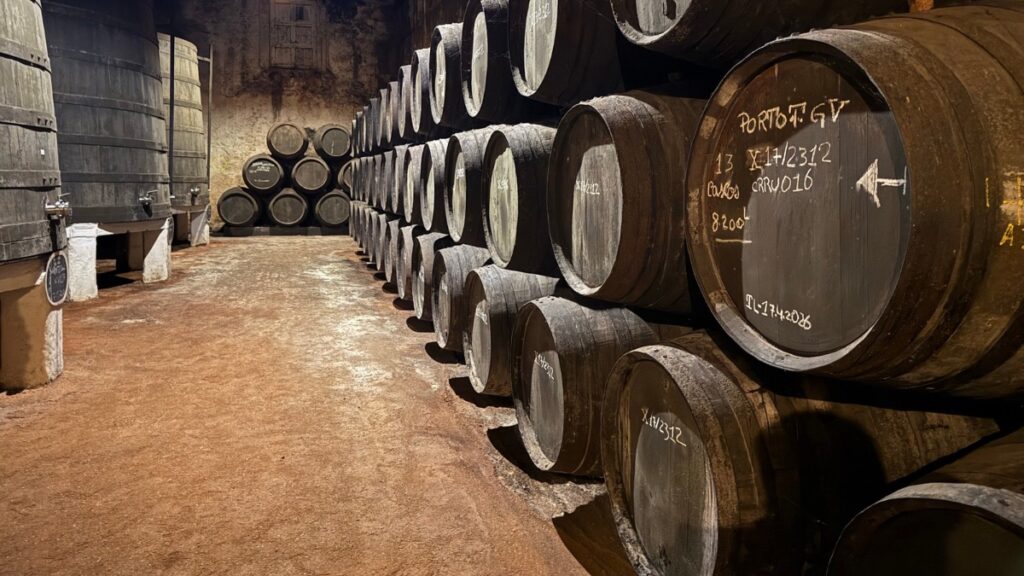
Tawny is the Port that ages in wood. Instead of resting in large vats with little contact with air, it spends years, sometimes decades, in small oak barrels called pipes. Over time, slow contact with oxygen fades the deep ruby color to amber and golden brown, and builds flavors of fig, orange peel, toasted nuts and caramel.
Ruby Port is the opposite idea: it stays fruity and bright, closer to the grape. Tawny is smoother, softer and more complex.
What do 10, 20, 30 and 40 mean on a Tawny label?
These numbers do not mean that the wine was made in a single year. A Tawny with an age statement is a blend of wines from several harvests, and the number describes the average age or style of that blend. A 10 Year Old Tawny tastes of dried fruit and hazelnuts, and a 20 or 30 Year Old becomes deeper, nuttier and more concentrated. A Tawny with no age statement is the simplest version, a blend of wood-aged Ports that spent at least about three years in barrel.
How do you serve and pair Tawny Port?
Many people like Tawny lightly chilled, which keeps the sweetness fresh. It is a very easy wine to pair: nuts, dried fruit, blue cheese, pâté and chocolate desserts all work well. If you are new to the style, I would start with a 10 Year Old Tawny. It shows the nutty character without being too intense.
Where to try Tawny Port in Porto
The Port cellars are not in Porto itself but across the river in Vila Nova de Gaia, which is home to more than 60 historic lodges. Graham’s, Taylor’s, Cockburn’s and Sandeman are four well-known names, and most offer guided tours that end with a tasting. It is worth booking ahead, since popular ones fill up quickly. Ask for an aged Tawny, and take the time to compare a 10 Year Old with a 20.
Want to taste it at its source? In October 2027, I am taking a small group to Porto and the Douro Valley for six days. See the Portugal journey →
Get the free guide: 5 Flavors to Know Before You Go to Porto and the Douro Valley →
Marcos Wolff, chef and wine specialist, is the founder of Wine Food Adventures.